
Discover expert methods for car window scratch repair. Learn DIY fixes, when to call a pro, and how to maintain pristine auto glass for safety and value.
Every driver knows that sinking feeling. You hear the tell-tale scrape against your window glass, or you walk up to your car and see a fresh, glaring scratch catching the sunlight. Whether it’s from a stray piece of gravel, a careless scrape with a ring, or debris from an automatic car wash, scratches on your car windows are more than just a cosmetic eyesore. They can compromise visibility, weaken structural integrity, and diminish your vehicle’s resale value. The good news? Not all scratches are created equal, and many are repairable. This comprehensive guide dives deep into the world of car window scratch repair, providing you with the knowledge to assess, fix, and prevent damage to your auto glass.
Table of Contents
(a) Understanding Car Window Scratches: Types and Severity
Before attempting any repair, it’s crucial to diagnose the type and depth of the scratch. Automotive glass, typically laminated for windshields and tempered for side and rear windows, is incredibly strong but not impervious to damage. Correctly identifying the scratch is the first step in any successful car window scratch repair process.
The Anatomy of Auto Glass Scratches
Scratches are classified by their depth, which directly determines the repair method.
- Surface-Level Scratches (Clears or Haze): These are the most common and live only in the topmost layer of the glass. They often feel smooth to the touch (your fingernail won’t catch) and are usually caused by light contact with dirt, improper wiping with gritty cloths, or wiper blades dragging debris. They appear as a haze or a series of fine lines that are visible in certain light.
- Light to Medium Scratches (Fingernail Catchers): As the name suggests, these scratches are deep enough for your fingernail to catch in. They are often caused by harder materials like sand, metal, or harder impact. This depth begins to affect the structural layer of the glass, especially on laminated windshields, and requires more attention.
- Deep Scratches and Cracks: If the scratch is very deep, wide, or has begun to spider into a crack, it has likely compromised the integrity of the glass. A deep scratch on a tempered side window can significantly weaken it, making it prone to spontaneous shattering. These are NOT candidates for DIY repair and require immediate professional assessment and likely full glass replacement.

Why Scratches Are More Than a Cosmetic Issue
Ignoring a scratch can lead to bigger problems:
- Reduced Visibility: Scratches, especially when hit by oncoming headlights or direct sunlight, can create glare and light scatter, blinding the driver.
- Windshield Wiper Performance: Scratches on the windshield can cause wiper blades to chatter, skip, and wear out prematurely, reducing effectiveness in rain.
- Structural Weakness: On laminated windshields, a deep scratch compromises the inner plastic layer, reducing the glass’s ability to remain intact in an impact or rollover.
- Resale Value Reduction: A scratched window is a clear indicator of poor maintenance to potential buyers.
Assessing Your Scratch: The DIY Diagnosis
A simple two-step test can help you determine if a DIY car window scratch repair is feasible.
Step 1: The Fingernail Test. Gently run your fingernail across the scratch, perpendicular to its direction.
- If your nail does not catch and simply glides over it, it’s likely a surface scratch.
- If your nail catches and dips into the groove, it’s a deeper scratch.
Step 2: The Light Reflection Test. View the scratch from different angles in direct sunlight or with a bright flashlight.
- Surface scratches often disappear when viewed directly but appear as a haze from an angle.
- Deeper scratches are visible from almost all angles and may have a white, reflective appearance.
If your scratch passes the fingernail test (i.e., your nail catches), it is highly recommended to consult a professional auto glass technician for an evaluation before proceeding.
Professional Car Window Scratch Repair Methods
For scratches beyond the most superficial, professional intervention is the safest and most effective route. Professionals use precise tools and materials to restore clarity.
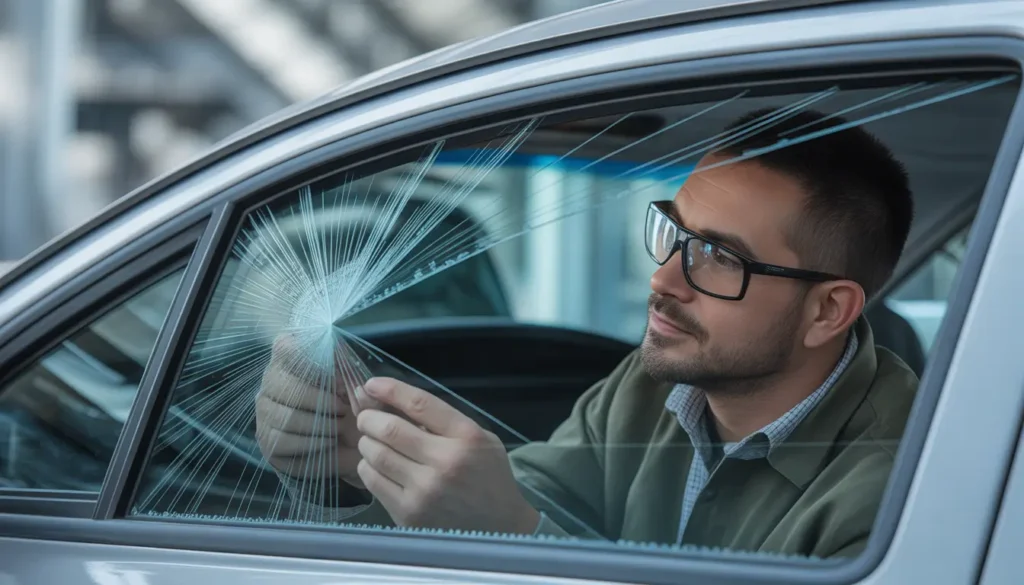
Cerium Oxide Polishing: The Professional Standard
This is the most common professional method for light to moderate scratches. Cerium oxide is a rare-earth compound that acts as a fine, yet effective, abrasive.
- Process: The technician uses a specialized rotary or orbital polisher with a felt or foam pad. A slurry of cerium oxide powder and water is applied.
- Action: The machine polishes the area at controlled speeds, slowly abrading the high points of the scratch to blend it with the surrounding glass. This requires skill, as generating too much heat can warp the glass.
- Result: When done correctly, the scratch is significantly reduced or eliminated, and optical clarity is restored.
Resin Filling for Deeper Scratches
For scratches too deep to polish out completely without thinning the glass, a clear, optical-grade resin may be used.
- Process: The scratch is thoroughly cleaned. A specially formulated resin is injected into the groove.
- Curing: The resin is cured using a UV light, bonding it to the glass.
- Finish: The excess resin is polished away, leaving a smooth, filled surface that improves both appearance and strength.
When Replacement is the Only Option
Professionals will advise replacement if:
- The scratch is on the driver’s direct line of sight and cannot be polished to perfect clarity.
- The scratch is on a tempered side/rear window and is deep enough to risk spontaneous breakage.
- The scratch has propagated into a crack.
- The scratch is on the interior surface of laminated glass (often requiring replacement).
DIY Car Window Scratch Repair: A Step-by-Step Guide
For confirmed surface-level scratches only, a careful DIY approach can yield good results. Warning: Attempting this on deeper scratches can make them worse.
Tools & Materials You’ll Need:
- Automotive glass cleaner
- Microfiber cloths (several)
- Painter’s tape
- DIY Option A: A specialized glass polishing compound (like Cerium Oxide kits available to consumers) and a variable-speed rotary polisher/buffer.
- DIY Option B (Lightest Scratches): A high-quality glass polish and a lot of elbow grease, applied by hand with a firm, clean pad.
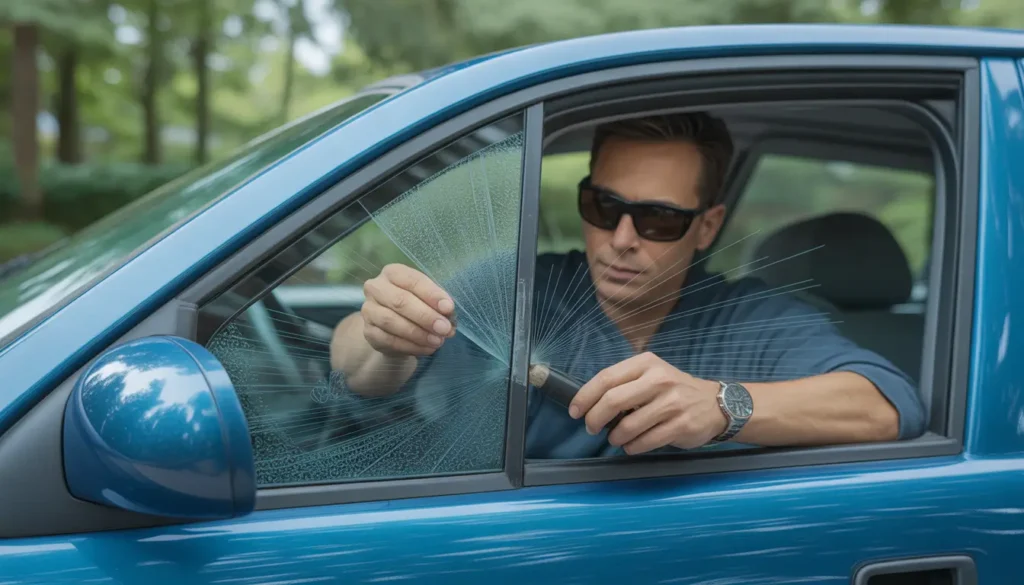
The Safe DIY Polishing Process:
- Preparation is Key: Park in a shaded, cool area. Clean the scratched area and a generous surrounding zone with glass cleaner and a microfiber cloth. Ensure zero grit remains. Use painter’s tape to mask off any trim, rubber seals, or paint around the window to protect them.
- Apply the Polish: If using a cerium oxide kit, mix as directed. If using a pre-mixed polish, shake well. Apply a small amount to your applicator pad or directly to the glass.
- The Polishing Action:
- With a Machine: Use the lowest effective speed setting. Keep the polisher moving in a steady, overlapping pattern. Do not hold it in one spot, as friction heat is the enemy. Frequently mist the area with water to keep it cool and lubricated. This is a slow process—expect to work the area for several minutes.
- By Hand: Using a firm, clean cloth or applicator, rub in small, tight circles with significant pressure. This requires patience and stamina, as glass is very hard.
- Inspect and Repeat: After a few minutes, wipe the area clean with a fresh microfiber cloth. Inspect under light. The scratch should be diminished. You may need to repeat the process 2-3 times for gradual improvement. Know when to stop. Over-polishing can create a distorted dip in the glass.
- Final Clean-Up: Once satisfied, remove the tape and give the entire window a final clean with glass cleaner.
Critical DIY Tip: Practice on an inconspicuous area or an old piece of glass first. The goal is improvement, not perfection.
Prevention: The Best Form of Car Window Scratch Repair
Preventing scratches is far easier and cheaper than fixing them. Integrate these habits into your car care routine.
- Proper Washing Technique: Always rinse the entire car, including windows, thoroughly with water before touching them with a wash mitt. This removes loose abrasive grit. Use a dedicated, clean microfiber towel or a squeegee for drying glass.
- Wiper Blade Maintenance: Replace wiper blades every 6-12 months. Never run dry wipers on a dirty windshield; always use washer fluid. Clean the rubber edges of your wipers periodically with alcohol.
- Mind Your Surroundings: Be cautious of vegetation, branches, and garage door edges when driving or parking. Keep a safe distance from construction vehicles or gravel haulers on the highway.
- Interior Care: Be mindful of seatbelts, zippers, and hard objects that may contact the interior side of the windows. Clean interior glass with a soft cloth and an ammonia-free cleaner designed for automotive interiors.
- Professional Cleaning: If using an automatic car wash, choose “touchless” options to avoid the risk of abrasive brushes.
The Cost-Benefit Analysis: Repair vs. Replace
Understanding the financial and safety implications is crucial.
- DIY Repair Cost: $20 – $100 for a quality kit or polish and tools. Risk: Potential for making the scratch worse if done incorrectly.
- Professional Polish/Repair Cost: $100 – $300, depending on scratch severity and location. Benefit: Expert skill, proper tools, and a guaranteed result.
- Window Replacement Cost: $200 – $1,000+, varying widely by vehicle model, glass type (acoustic, heated, etc.), and calibration needs for ADAS (Advanced Driver Assistance Systems). Benefit: Restores full structural integrity and optical clarity.
The Verdict: For surface and light scratches, professional polishing offers excellent value. For deep scratches, cracks, or any damage in the critical vision area, replacement is the only safe and viable investment.
FAQ: Your Car Window Scratch Repair Questions Answered
Can toothpaste really fix a scratched car window?
While toothpaste contains mild abrasives (like baking soda or silica) and can slightly improve the appearance of a very superficial haze, it is not a recommended or reliable method for car window scratch repair. It lacks the controlled abrasives of professional compounds, can be inconsistent, and may contain chemicals that damage window tints or seals. It’s a last-resort, minimal-expectation trick.
Does insurance cover scratch repair or replacement?
Comprehensive auto insurance typically covers glass damage, including deep scratches that necessitate replacement. Many policies even offer zero-deductible glass coverage. However, simple polishing for cosmetic scratches is rarely covered, as it’s considered maintenance. Always check with your insurance provider before filing a claim.
How long does a professional polish repair last?
A properly performed professional polish is permanent. The material is removed, not just covered up. The repaired area will have the same longevity as the rest of your glass, provided it is not scratched again.
Can a scratched window shatter?
Yes, especially if it’s a deep scratch on a tempered glass window (side or rear). Tempered glass is under immense surface tension. A deep scratch can compromise this tension, potentially causing the entire window to spontaneously explode into small cubes. This is a serious safety hazard.
Do scratches affect ADAS (Advanced Driver Assistance Systems)?
Absolutely. If the scratch is in the field of view of a camera (mounted typically behind the windshield for systems like lane-keep assist, automatic emergency braking, or adaptive cruise control), it can distort the image and cause system malfunctions, warnings, or complete deactivation. Repairs or replacements in this area often require costly system recalibration.
Conclusion: Clarity, Safety, and Peace of Mind
Dealing with a scratched car window doesn’t have to be a source of ongoing frustration. By understanding the types of scratches, properly assessing the damage, and choosing the appropriate response—whether it’s a careful DIY approach for minor flaws, a call to a professional for a skilled polish, or a timely replacement for serious damage—you are taking vital steps to preserve your safety, your vehicle’s integrity, and its value.
Remember, car window scratch repair is a blend of art and science. When in doubt, the expertise of a certified auto glass technician is your best investment. They can provide a definitive diagnosis, ensure the job is done safely and effectively, and restore the crystal-clear view that every driver deserves. Prioritize clear vision and structural soundness; your safety on the road depends on it.