
Troubleshoot a “car won’t start” situation like a pro. From a simple dead battery to major engine failure, our expert guide walks you through diagnosis and solutions.
There’s no sound more disheartening than the silence, clicking, or futile cranking of an engine that refuses to start. A non-starting car is more than an inconvenience; it’s a puzzle waiting to be solved. Before you call for an expensive tow truck, a systematic diagnosis can often identify—and sometimes even fix—the problem. This comprehensive guide will equip you with the knowledge to understand why your car wont start, from the most common culprits to the more complex issues. We’ll walk you through the symptoms, the diagnostic steps, and the potential fixes, empowering you to communicate effectively with a mechanic or tackle the repair yourself.
Table of Contents
(a) The First Step: Listening to Your Car’s Symptoms
Before you pop the hood, perform this critical first assessment: Listen and Observe. The specific symptoms your car exhibits are the most important clues. Ask yourself these questions:
- Does the engine crank (turn over) normally but never fire up?
- Is there just a rapid clicking sound when you turn the key?
- Is there absolute silence, or do the dashboard lights dim dramatically?
- Does it crank very slowly, like the battery is tired?
The answer will point you toward one of three major categories of problems: Battery/Electrical, Ignition/Starting, or Fuel/Engine. Let’s break down what each symptom typically means.
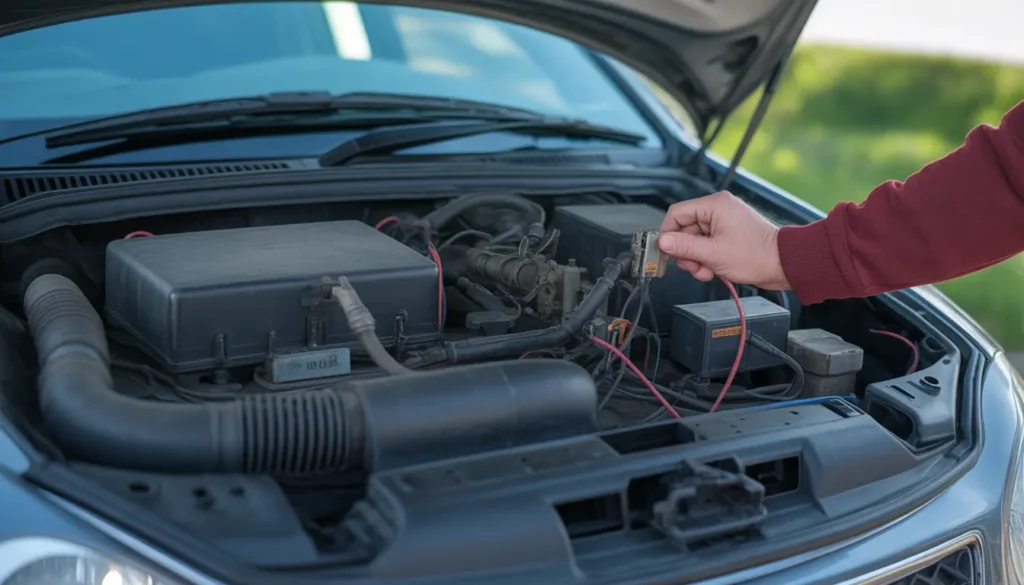
The Dead Giveaway: Interpreting the Sounds of a No-Start
- “Click, Click, Click” (Rapid Clicking): This is the classic sign of a dead battery or a very poor battery connection. The battery has enough power to engage the starter solenoid (the click) but not enough to spin the starter motor.
- Silence or a Single “Clunk”: You turn the key and get nothing, or just one solid thunk. This could be an utterly dead battery, severely corroded battery terminals, a faulty ignition switch, or a bad starter motor.
- Slow, Labored Cranking: The engine tries to turn over but sounds sluggish, like it’s dragging. This points to a weak battery, poor battery connections, or sometimes a failing starter.
- Normal Cranking But No Start: The engine spins over at its usual speed but never catches and runs. This eliminates the battery and starter as the primary suspects. Now you must investigate fuel delivery, ignition (spark), or engine compression issues.
- Engine Starts Then Immediately Dies: This often indicates a problem with the fuel system (like a bad fuel pump) or the immobilizer/security system not recognizing your key.
Diagnosing a Dead or Weak Battery
The battery is the heart of your car’s electrical system and the most frequent offender in a car wont start scenario. Here’s how to confirm it.
Visual Inspection and Terminal Check
First, inspect the battery itself. Look for:
- Corrosion: A white, blue, or green crusty substance on the terminals. This impedes electrical flow.
- Physical Damage: A cracked or bloated battery case.
- Loose Connections: Ensure the terminal clamps are tight and secure.
Fix: Clean corrosion with a mixture of baking soda and water and a wire brush. Tighten connections securely.
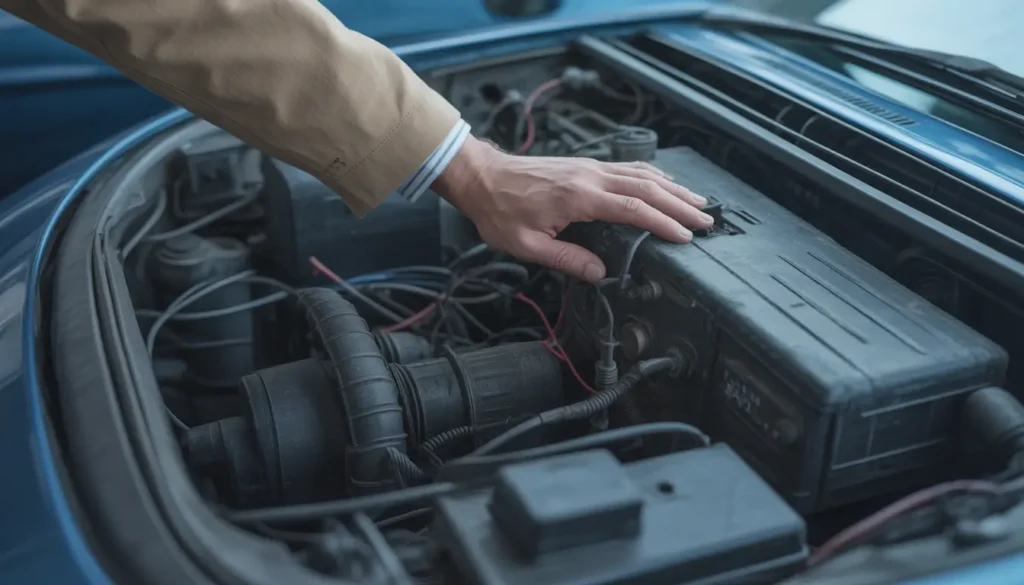
Testing Battery Voltage and Jump-Starting
A multimeter is your best friend. A fully charged battery should read about 12.6 volts with the car off. With the key in the “run” position (headlights on), it should not drop below roughly 10.5 volts.
- Below 12V: The battery is likely discharged.
- If voltage drops severely under load: The battery is weak and needs replacement.
Jump-Start Procedure: If the battery is dead, a jump-start can get you going.
- Park the donor car close, engines off.
- Connect RED clamp to DEAD battery’s positive (+) terminal.
- Connect other RED clamp to GOOD battery’s positive (+) terminal.
- Connect BLACK clamp to GOOD battery’s negative (-) terminal.
- Connect final BLACK clamp to an UNPAINTED METAL BRACKET or engine bolt on the dead car (NOT the dead battery’s negative terminal).
- Start the donor car, let it run for a few minutes.
- Attempt to start the dead car.
- If successful, carefully disconnect cables in reverse order.
⚠️ Important: If a jump-start works but the car won’t start again later, your battery is likely dead for good or your alternator is not charging it. Have both tested at an auto parts store.
When the Starter Motor is the Culprit
If battery issues are ruled out, the starter motor or its circuit is the next suspect. The starter is a high-torque electric motor that physically spins the engine to begin the combustion process.
Signs of a Failing Starter Motor
- A single, loud “clunk” with no cranking.
- Intermittent starting problems—sometimes it works, sometimes it doesn’t.
- Grinding noises during cranking (could also be a faulty flywheel).
- Freewheeling sound (the starter spins but doesn’t engage the engine).
How to Test the Starter Circuit
A sophisticated test involves checking for voltage drop at the starter, but a simple “tap test” can sometimes diagnose a stuck starter. CAUTION: Ensure the car is in Park or Neutral with the parking brake on. While an assistant turns the key, gently tap the side of the starter motor (a long socket extension can help) with a hammer or wrench. If the car starts, the starter’s internal solenoid or brushes are worn and it needs replacement soon.
Because testing the starter circuit thoroughly often requires technical skill, if you’ve confirmed a good battery and good connections, a faulty starter motor is a likely reason your car wont start.
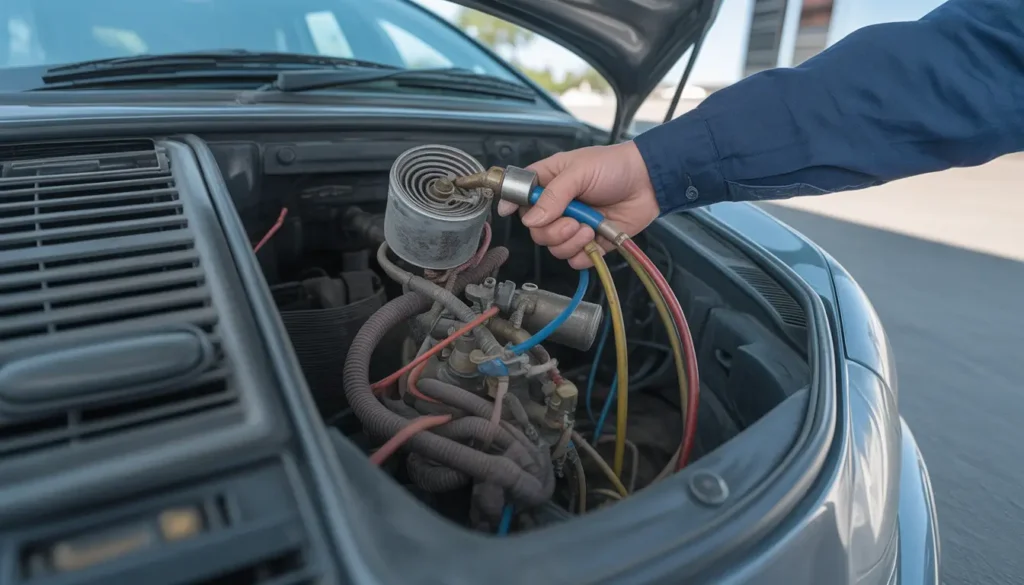
Fuel System Failures: No Gas, No Go
If your engine cranks healthily but doesn’t start, it’s not getting one of the three essentials: Spark, Fuel, or Air. The fuel system is a prime suspect.
Listening for the Fuel Pump
When you first turn the key to the “ON” position (before cranking), you should hear a faint whirring or humming sound from the rear of the car (where the fuel tank is) for about 2-3 seconds. That’s the electric fuel pump pressurizing the system. No sound could mean a dead fuel pump, a blown fuse, or a faulty fuel pump relay.
Checking Fuel Pressure and Injectors
Professional diagnosis involves connecting a fuel pressure gauge to the fuel rail’s test port. Low or zero pressure confirms a problem with the pump, fuel filter (clogged), or pressure regulator. Modern cars also rely on electronic fuel injectors to spray fuel. A faulty fuel injector driver circuit or a failed engine control unit (ECU) can also prevent starting.
Ignition System Issues: No Spark, No Start
The ignition system creates the high-voltage spark needed to ignite the air-fuel mixture in the cylinders. A failure here means no combustion.
Common Ignition Component Failures
- Spark Plugs: Worn or fouled plugs can fail to spark. They are a maintenance item.
- Ignition Coils/Packs: These transform low battery voltage into the high voltage needed for spark. One failing coil may cause a misfire, but multiple failures can cause a no-start.
- Crankshaft Position Sensor (CKP): This is a critical sensor. The engine computer (ECU) uses it to know the position and speed of the crankshaft. If it fails, the ECU doesn’t know when to fire the spark plugs or injectors, resulting in a crank-no-start.
- Distributor (on older cars): A failing distributor cap, rotor, or ignition control module can kill the spark.
Diagnosing spark issues often requires a spark tester or removing a spark plug, grounding it to the engine, and watching for a bright blue spark while cranking (CAUTION: This involves high voltage).
Other Critical Causes: From Security Systems to Major Engine Failure
Immobilizer and Security System Problems
Modern cars have transponder keys. If the immobilizer system doesn’t recognize the chip in your key, it will allow the car to crank but will disable the fuel injectors or ignition, causing a no-start. Symptoms include a security warning light on the dash. Try a spare key if available. Sometimes, simply locking and unlocking the car with the key fob can reset the system.
Air Intake and Sensor Issues
A severely clogged air filter is unlikely to cause a complete no-start, but a major vacuum leak or a failed mass airflow sensor (MAF) can disrupt the air-fuel ratio enough to prevent starting.
The Worst-Case Scenario: Engine Mechanical Failure
While less common, catastrophic internal failure can cause a car wont start.
- Timing Belt/Chain Failure: If this critical component breaks, the engine’s valves and pistons fall out of sync, often leading to catastrophic collision inside the engine. The engine may crank unusually fast or make a horrible grinding/clicking sound.
- Severe Lack of Compression: Worn piston rings, burnt valves, or a blown head gasket can cause compression to be too low for combustion. A mechanic uses a compression tester to diagnose this.
Preventive Maintenance to Avoid a No-Start
The best repair is the one you never have to make. Incorporate these habits:
- Battery: Replace every 3-5 years. Keep terminals clean.
- Fuel: Don’t constantly run on fumes. It causes the fuel pump to overheat. Replace the fuel filter as scheduled.
- Ignition: Follow the manufacturer’s schedule for spark plug replacement.
- Starting System: Address slow cranking immediately; don’t wait for a complete failure.
- Timing Component: Adhere STRICTLY to the manufacturer’s replacement interval for the timing belt.
FAQ: Your Car Won’t Start Questions Answered
What should I do first if my car won’t start?
Always start with the symptoms. Listen to the sound it makes. Check for obvious issues like a dead key fob battery, being out of fuel, or not having the car in “Park” or “Neutral”. Then, inspect battery terminals for corrosion.
Can a bad alternator cause a car not to start?
A failing alternator itself typically won’t prevent the car from starting if the battery is still charged. However, a completely failed alternator will have drained the battery, which will then cause a no-start. The problem is usually the dead battery, caused by the alternator.
Why did my car not start after getting gas?
This is a known issue with some vehicles. The most common cause is a faulty or stuck vapor purge valve (part of the EVAP system), which can flood the engine with fuel vapors when opened at the wrong time. Letting the car sit for 10-15 minutes may allow it to start.
How do I know if my starter is bad or my battery is dead?
A dead battery usually causes dim lights and a rapid clicking sound. A bad starter often causes a single clunk or silence, even with a strong, fully charged battery confirmed with a multimeter or after a successful jump-start from another vehicle.
Can bad spark plugs cause a car to not start?
Yes, if multiple spark plugs have failed completely or are severely fouled, they will not create a spark, leading to a crank-but-no-start condition. This is more common in high-mileage vehicles with neglected maintenance.
Conclusion: Empowerment Through Diagnosis
A car wont start is a universal automotive headache, but it doesn’t have to be a mystery. By methodically working through the symptoms—starting with the simple and common battery and terminal connections, moving to the starting system, and then to fuel and ignition—you can isolate the vast majority of problems. This knowledge not only saves you time and money but also empowers you to be a more informed vehicle owner. Remember, safety first: if you are ever unsure or the repair is beyond your comfort level, consulting a trusted professional mechanic is always the right call. Bookmark this guide, and the next time you’re met with silence from your engine, take a deep breath and start your detective work.